
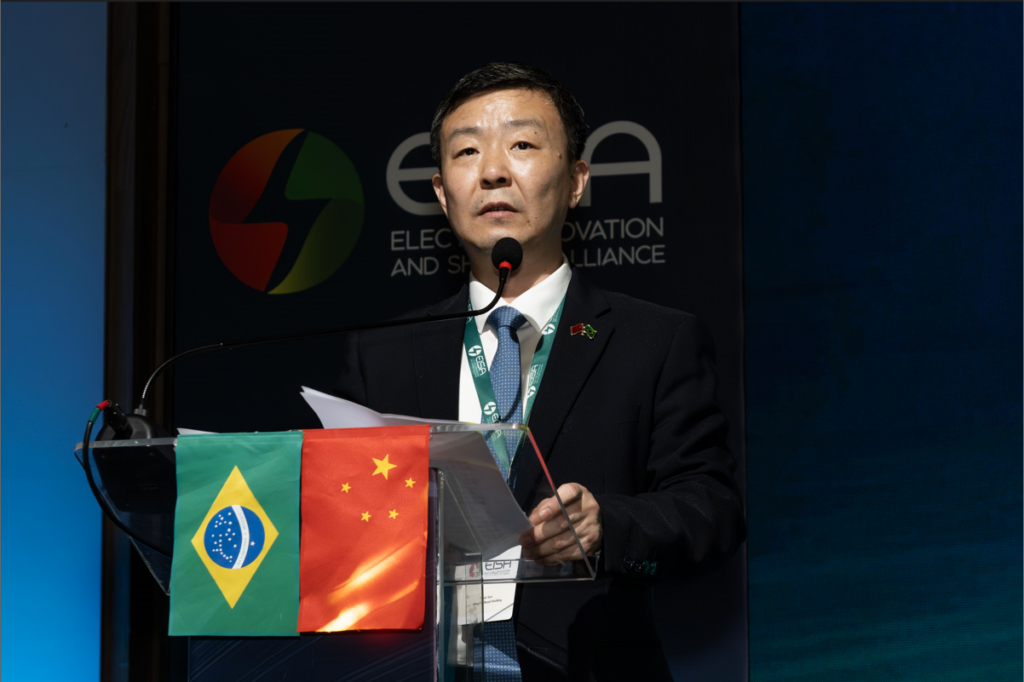
Alliance brings together companies from the State Grid group, the Ministry of Mines and Energy, ONS, Brazilian and Chinese universities
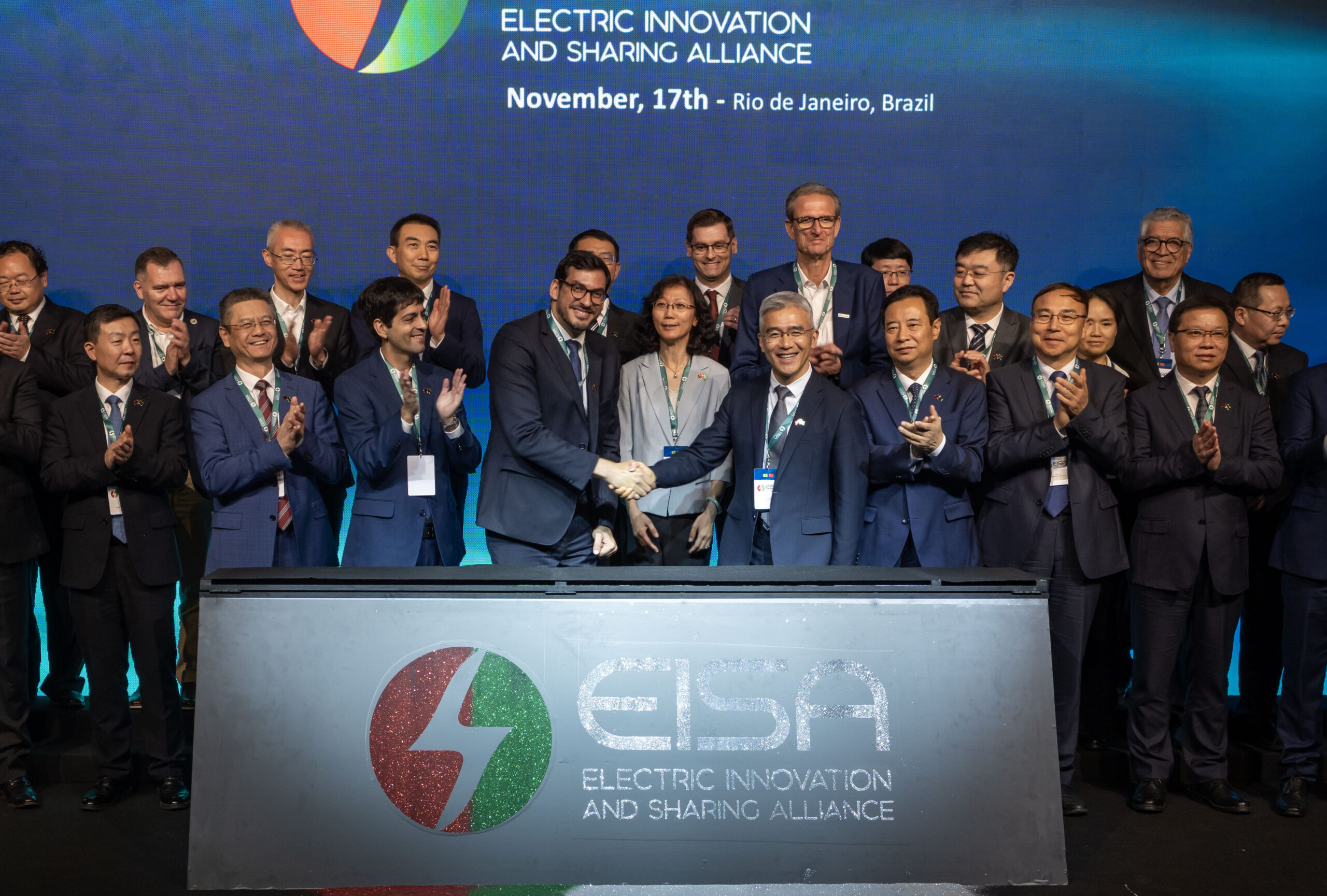
The Electric Innovation and Sharing Alliance (EISA) was formalized on Sunday (17/11) by representatives of the Brazilian and Chinese electric sector, including State Grid Brazil Holding, which is leading the initiative, which brings together the participation of the Ministry of Mines and Energy (MME), the National Electric System Operator (ONS), Brazilian and Chinese universities, and companies in the electric sector. A Memorandum of Understanding was signed by the founding entities of Brazil and China,
EISA, an initiative led by SGBH in Brazil, was created with the aim of establishing a platform for technological innovation and sharing of experiences to deepen cooperation and communication between leading institutions in Brazil and China, seeking to improve and make the energy sector more efficient, given a scenario of energy transition and the increasingly pressing need for the use of renewable energy sources.
The chairman of State Grid Brazil Holding, Sun Tao, highlighted:
· Both China and Brazil face many opportunities, risks and challenges that require joint solutions in the development of the energy sector. Therefore, we proposed the establishment of the China-Brazil Electric Power Innovation Alliance (EISA), which would pool the knowledge and resources of governments, research institutions, universities, enterprises and other sectors to promote sharing and form a collaborative force for technological innovation and jointly drive the energy industry to higher levels and better quality development.
Present at the Alliance's formalization ceremony, the National Secretary for Energy Transition and Planning of the MME, Thiago Barral, highlighted the importance of the initiative for the national electricity sector.
· This approach is essential so that we can use Brazil, as well as China, as platforms for the development and large-scale demonstration of innovative solutions for the transformation of the electricity system. said Barral in his speech.
According to the SGBH chairman, EISA will bring together a board of directors as the highest decision-making body, an expert committee and a daily contact working group (secretariat) responsible for technical support and daily affairs. The annual work plan includes organizing regular internal technical exchanges and discussions to share technical information.
· We have tentatively identified the technical direction for joint research in 2025. We will focus on the challenges to grid stability posed by large-scale renewable energy integration and delve into how to improve grid operational reliability and flexibility under conditions of high proportions of new energy integration. At the same time, EISA will explore coordinated control technologies for AC-DC (alternating current-direct current) hybrid grids and develop viable security operation strategies to address the increasingly complex scheduling and control demands of future power systems, driving innovation and optimization in grid technology, Sun Tao said.
Representatives of State Grid Brazil Holding (SGBH); Energy Research Company (EPE); National Electric System Operator (ONS); CPFL Energia; China Electric Power Research Institute (CEPRI); State Grid Energy Research Institute (SGERI); Federal University of Rio de Janeiro (UFRJ); CET Brazil Electric Power Equipment and Technology; University of São Paulo (USP); NARI Brazil; North China Electric Power University (NCEPU); China Electric Power Planning & Engineering Institute (EPPEI); Fluminense Federal University (UFF) participated in the signing of the document and, as witnesses, representatives of State Grid Corporation of China and the Ministry of Mines and Energy.